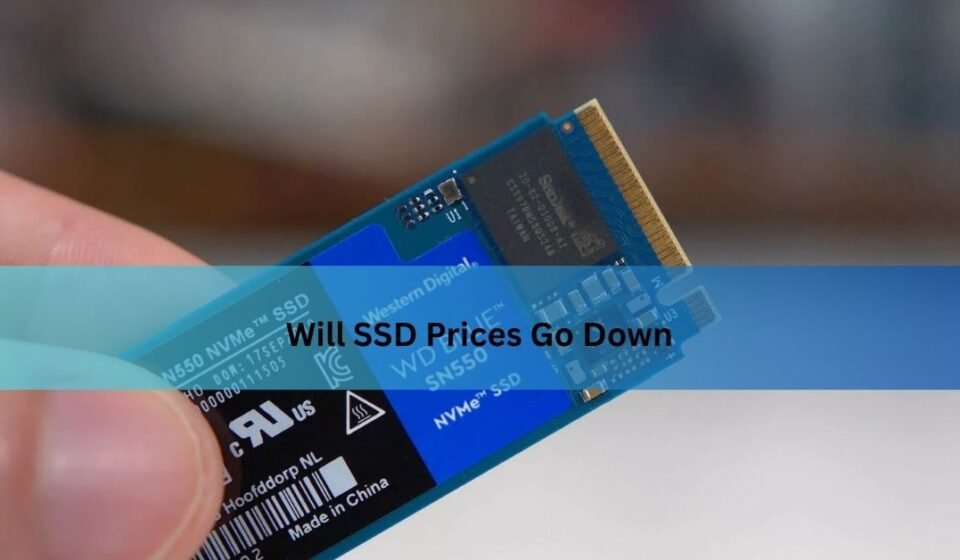

If you have shopped for storage recently, you already know something feels off. Drives that used to cost the price of a nice dinner now cost as much as a plane ticket. So it makes sense that one question keeps popping up in every tech forum, comment section, and search bar: will SSD prices go down anytime soon? This guide walks through exactly what is happening in the storage market right now, why it happened, and what the most reliable forecasts say about where prices are headed next.
We will not sugarcoat it. The short answer is that relief is not coming quickly. But there is a lot of nuance behind that answer, and understanding it will help you make a smarter buying decision instead of just guessing.
Quick Answer
No, SSD prices are not expected to drop meaningfully during 2026. Most industry analysts now point to 2027 as the earliest realistic window for prices to start easing. The main driver behind the increase is a global shortage of NAND flash memory, the core component inside every SSD, caused largely by AI data centers buying up the majority of available supply.
Current SSD Price Snapshot
To understand how strange this moment is, it helps to look at real numbers rather than vague percentages. A 1TB drive that many buyers grabbed for around fifty dollars back in 2023 now often costs closer to ninety or well over a hundred dollars, depending on the brand and generation. Higher-capacity drives have been hit even harder, with some 8TB consumer SSDs pushing well past a thousand dollars.
Here is a simplified look at how pricing has shifted for popular drive sizes:
| Capacity | 2023 Low (approx.) | Early 2026 Price (approx.) | Change |
| 1TB NVMe | $50–$60 | $90–$120 | Roughly doubled |
| 2TB NVMe | Under $100 | $180–$230 | More than doubled |
| 4TB NVMe | $200–$250 | $450–$600 | Nearly tripled |
| 8TB NVMe | $700–$900 | $1,400+ | Nearly doubled |
These figures move around week to week depending on retailer promotions, but the overall direction has been consistently upward since early 2026.
Why Are SSD Prices Rising in the First Place?
The honest answer comes down to simple supply and demand, but the demand side is unlike anything the storage industry has dealt with before. A few forces are colliding at once.
First, artificial intelligence data centers have become massive consumers of NAND flash memory. Training and running large AI models requires enormous amounts of fast storage, and manufacturers have shifted much of their production capacity toward these high-margin enterprise customers instead of everyday consumer drives.
Second, there simply is not enough new factory capacity to meet this demand right now. Building a new semiconductor fabrication plant takes years, so even if manufacturers wanted to ramp up production overnight, they physically cannot. Most new capacity is not expected to come online until 2027.
Third, some manufacturers have made strategic decisions that shrink consumer options even further. For example, at least one major manufacturer has moved to halt production of older SATA SSDs, which pushes more buyers toward pricier NVMe alternatives and reduces overall competition on the shelf.
Finally, demand from everyday consumers has not disappeared either. In some regions, government incentives for upgrading personal computers have added extra pressure on top of an already strained supply chain.
Put simply, the SSD sitting in your cart is now competing directly with the storage racks powering AI chatbots, and right now, the data centers are winning that competition.
A Quick Look Back: The SSD Price Rollercoaster (2020–2026)
It is worth understanding how we got here, because the swings over the past several years have been dramatic.
During the pandemic, prices climbed as demand for home computing equipment spiked. Then in 2021, a wave of cryptocurrency mining activity around a coin called Chia briefly sent storage prices even higher, as miners bought up drives in bulk. That frenzy did not last.
By 2023, the market swung hard in the opposite direction. Manufacturers had built up far more supply than the market needed, and prices collapsed by more than half from their peak. This became known as the golden era of cheap storage, when buyers could grab a full terabyte of fast NVMe storage for around fifty dollars.
Through 2024 and into 2025, prices recovered slightly and even softened again at points, lulling many buyers into thinking cheap storage was simply the new normal. Then, starting in early 2026, everything changed. AI-driven demand collided with tight supply, and prices broke sharply upward in a way few analysts had predicted just months earlier.
2026 Price Trend, Quarter by Quarter
Rather than treating 2026 as one flat story, it helps to look at how the year has actually unfolded so far, since the pace of change has shifted significantly from quarter to quarter.
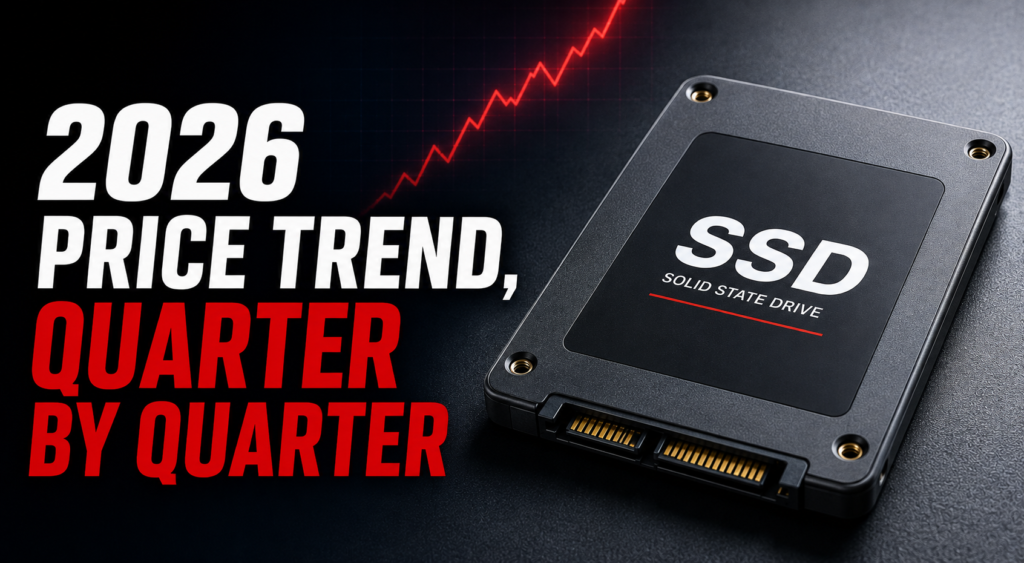
Q1 2026 kicked things off with a jolt. Contract prices for NAND flash rose more than forty percent quarter over quarter, catching much of the industry off guard.
Q2 2026 turned out even more extreme, with some reports showing contract price growth in the range of seventy percent compared to the previous quarter. This was the sharpest jump of the entire cycle.
Q3 2026 finally showed signs of the pace slowing down. Growth in contract pricing dropped to roughly ten to fifteen percent quarter over quarter, a clear deceleration compared to the previous two quarters, even though prices were still technically rising.
Q4 2026 remains the big open question. Some analysts believe the slowdown seen in Q3 will continue and prices may plateau. Others warn that enterprise buyers could stockpile inventory ahead of 2027 planning, which could push prices up again before the year closes out.
Contract Prices vs. Retail Prices: Why They Don’t Always Match
Here is something that trips up a lot of shoppers. When you read a headline saying NAND prices jumped seventy percent, that does not necessarily mean the SSD on the store shelf jumped by the same amount that same week.
Contract prices refer to the wholesale deals between memory manufacturers and the companies that buy chips in bulk, often negotiated months in advance. Retail prices are what you actually pay, and they sit on top of that contract price with a layer of retailer margin, promotions, and competition mixed in.
This is why you might occasionally spot a surprising sale on a specific SSD model even while the overall market trend is upward. A retailer may be clearing out older stock that was purchased before the price surge, or running a short-term promotion to move inventory. These deals do not necessarily signal a broader price drop is coming, so it is worth being cautious about reading too much into a single discount.
So, Will SSD Prices Go Down in 2027?
This is really the heart of the matter for most buyers, and the honest answer is: probably, but not dramatically, and not immediately.
Industry analysts largely agree that meaningful relief will not show up until 2027, once new factory capacity finally starts reaching the market. Even then, most experts caution against expecting a return to the ultra-low prices seen back in 2023. That kind of pricing was the product of a temporary oversupply, not a sustainable baseline, and the current shortage has reset expectations for what a “normal” SSD price looks like going forward.
A more realistic scenario is that prices stabilize rather than sharply decline, with occasional dips on specific models as competition among brands increases and new supply gradually enters the market.
Should You Buy an SSD Now or Wait?
There is no single right answer here, since it depends heavily on your situation. The table below breaks down a few common scenarios to help you think it through.
| Your Situation | Recommendation |
| Your current drive is full or failing | Buy now — waiting risks data loss or workflow disruption |
| You are building a new PC and need storage to function | Buy now, but compare multiple brands and capacities for the best deal |
| Your existing storage still has room to spare | Consider waiting, especially if you can stretch another 6–12 months |
| You need a very high-capacity drive (4TB+) | Watch for sales, since higher capacities have the most room to correct |
| You are hoping prices return to 2023 levels | Don’t wait for this specific outcome — it is not expected within the next year or two |
If you do decide to buy now, a few practical tips can help you avoid overpaying. Compare pricing across multiple retailers rather than settling on the first listing you see. Consider slightly older drive generations, which sometimes offer a better balance of price and performance during a shortage. And keep an eye on major sales events, since even in a tight market, retailers still compete for your attention during big shopping seasons.
Frequently Asked Questions
Will SSD prices go down in 2026?
Not significantly. Most forecasts point to prices holding steady or rising modestly through the rest of the year, with any meaningful decline unlikely until 2027.
Why are SSD prices so high right now?
The main reason is that AI data centers are consuming the majority of available NAND flash memory, leaving less supply for everyday consumer drives, while new factory capacity is not expected until 2027.
Is now a bad time to buy an SSD?
It depends on your needs. If you genuinely need storage today, waiting likely will not save you money in the short term. If your current storage can hold out, waiting toward 2027 may offer better pricing.
Will prices ever return to 2023 levels?
Most analysts consider this unlikely within the next twelve to twenty-four months. The 2023 pricing was driven by a temporary oversupply, and the market has structurally shifted since then.
Which SSD types are most affected by the shortage?
Higher-capacity NVMe drives have generally seen the steepest price increases, while some entry-level and older-generation models have seen comparatively smaller jumps.
Conclusion
If you came here hoping for a simple “yes, wait a few months and prices will drop,” the reality is more complicated than that. So, will SSD prices go down? Eventually, yes, but the timeline points to 2027 rather than anytime soon. For now, the smartest approach is to buy based on your actual storage needs, shop around for the best deal available today, and treat any near-term price relief as a bonus rather than something to count on.
Related Post:
Is There a Side Effect to Low Power NVMe SSD? A Complete, Easy-to-Understand Guide
Are 2230 SSDs Compatible With 2280 M.2 Slots?
How Much Free Space Should You Leave on Your SSD?
SSD Showing as Unallocated? What It Means and How to Fix It Safely
How to Copy an SSD to a Larger SSD Without Reinstalling Windows