

Short answer first, because you probably clicked here mid-upgrade with a browser tab open on Amazon: no, are ssds compatible with all motherboards . Whether one works on yours depends on the SSD’s interface, your motherboard’s slots, and a couple of settings buried in the BIOS that nobody reads until something breaks.
That said, most confusion here isn’t really about SSDs being “incompatible” in some mysterious way. It’s about buying the wrong type for the slot you actually have. This guide walks through exactly how to check before you spend money on a drive that won’t even boot.
The Short Answer
If you want the one-line version: SATA SSDs work with nearly every motherboard made in the last 15 years. NVMe SSDs need a compatible M.2 slot, and not every board has one or the right kind. That’s really the whole story behind are ssds compatible with all motherboards in a nutshell.
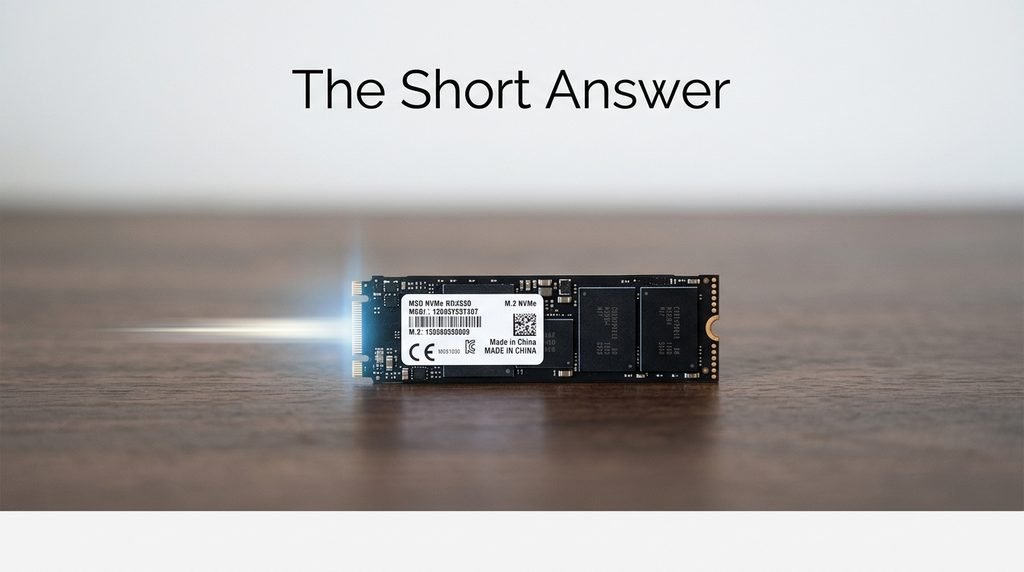
So when people ask are ssds compatible with all motherboards, the honest answer is “some types, on some boards, most of the time.” It’s not a yes-or-no situation, and treating it that way is exactly how people end up with a drive sitting unused in a drawer.
Why This Question Trips People Up
Here’s the thing — “SSD” isn’t one product. It’s a category that includes at least three genuinely different physical formats, each needing a different kind of connection on your motherboard. A 2.5-inch SATA SSD looks nothing like an M.2 NVMe stick, and they don’t plug into the same place. This alone explains most of the confusion around are ssds compatible with all motherboards people are really asking about three different products at once.
Manufacturers don’t always make this obvious on the box either. You’ll see “SSD” printed in huge letters and the interface details in small text near the barcode. That’s usually where people go wrong they match the price and capacity, skip the interface line, and end up with a drive that doesn’t fit anything on their board.
The Three SSD Types You’ll Run Into
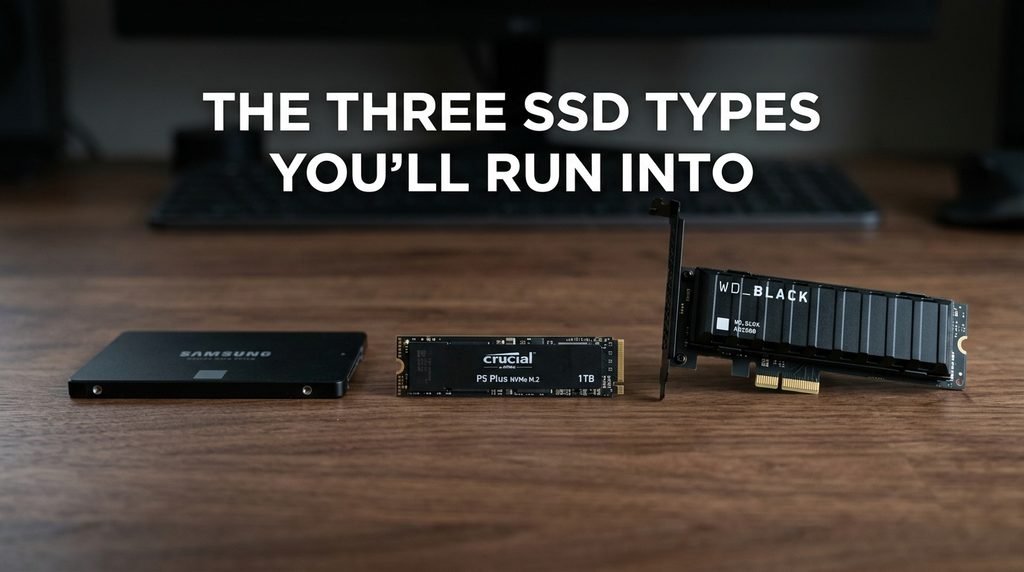
SATA SSDs — The Safe, Universal Choice
These use the same connector your old hard drive used. Nearly every desktop motherboard built since the mid-2000s has SATA ports, which makes this the closest thing to a universally compatible SSD for anyone asking are ssds compatible with all motherboards without wanting to dig into specs, and it’s the safest default recommendation for a quick, no-fuss upgrade. Speed tops out around 550MB/s, which sounds slow next to NVMe but still feels dramatically faster than a spinning hard drive.
If you’re wondering whether are ssds compatible with all motherboards specifically for the SATA type, the answer is close to yes. It’s rare to find a modern board — even a cheap one — without at least a couple of SATA ports built in. That’s exactly why so many budget builds and older PC upgrades default to this option.
M.2 SATA SSDs — The Confusing Middle Ground
This one catches people off guard constantly. It’s shaped exactly like an NVMe stick, plugs into the same M.2 slot, but runs over the SATA protocol instead of PCIe. If your motherboard’s M.2 slot only supports NVMe, this drive simply won’t be recognized — even though it physically clicks into place just fine. This is the type that most often makes people wonder are ssds compatible with all motherboards after the drive is already installed.
You’ll sometimes see this drive marketed simply as “M.2 SSD” with the SATA detail buried in the specs. It’s one of the biggest reasons people ask are ssds compatible with all motherboards after already buying the wrong drive — the packaging rarely makes the interface obvious.
M.2 NVMe SSDs — Fast, But Slot-Dependent
NVMe drives run over which is why they’re so much faster — often 3,000MB/s to 7,000MB/s depending on generation. The catch is that your motherboard needs an M.2 slot specifically wired for PCIe, not just any M.2 slot. Budget boards sometimes include only one, or none at all.
Gamers and video editors usually gravitate toward NVMe first, and for good reason — load times and export speeds genuinely improve. Just don’t assume every board handles it the same way; checking your specific M.2 slot’s wiring beforehand saves a return trip to the store.
How to Actually Check Your Motherboard
Skip the guesswork. Here’s the fastest way to know for certain whether are ssds compatible with all motherboards applies to your specific setup.
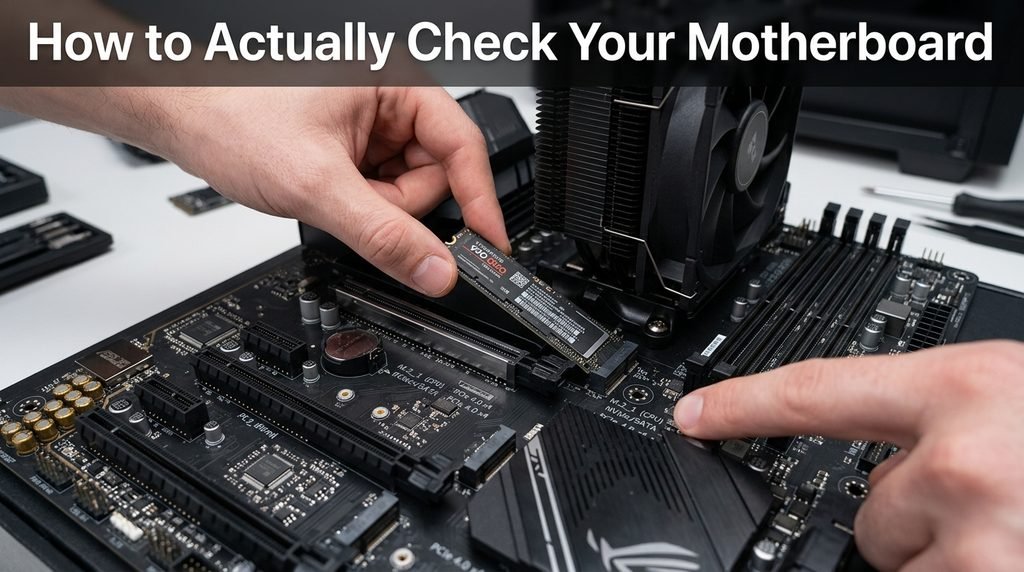
- Find your motherboard model — check the box, or run a system info tool like CPU-Z if the PC is already built.
- Search “[your motherboard model] specifications” and look at the storage section of the spec sheet.
- Note how many SATA ports it has, and separately, how many M.2 slots — plus what each M.2 slot supports (SATA, NVMe, or both).
- Check the M.2 slot’s maximum PCIe generation (3.0, 4.0, or 5.0), since this affects speed but not whether the drive works at all.
- If you’re using a laptop, check the manufacturer’s support page instead — laptop storage options are far more restrictive and vary wildly by model, and this is often where are ssds compatible with all motherboards questions get the most complicated answers.
That five-minute check saves you from returning a drive later, and it’s honestly the step most buying guides skip entirely. Most manufacturer sites also list a “QVL,” or qualified vendor list, showing SSD models the board has actually been tested with — worth a quick look if you want extra peace of mind before buying.
Once you’ve confirmed the interface your board supports, the rest of the shopping process is simple. You’re no longer guessing whether are ssds compatible with all motherboards in general — you know exactly what your board needs, and you can filter your search accordingly.
M.2 Keying — The Detail That Wrecks Most Upgrades
M.2 slots use notches called “keys” to physically prevent the wrong card type from being inserted. The two you’ll run into are B-key and M-key. NVMe SSDs are almost always M-key only, while some SATA M.2 drives use B+M keying to fit either type of slot.
If your motherboard’s M.2 slot is B-key only, an M-key NVMe drive physically won’t fit — the notch position doesn’t line up. This isn’t a software issue you can fix with a driver. It’s a hardware limitation, full stop. Always check the key type listed in your motherboard’s manual before ordering.
This is genuinely one of the more overlooked answers to are ssds compatible with all motherboards, because the drive can look perfectly fine in the listing photos and still be the wrong key type for your board. A quick look at your manual’s M.2 slot diagram usually clears this up in under a minute.
PCIe Generations: Can a Newer SSD Work in an Older Slot?
Generally, yes — PCIe is backward compatible. A PCIe 4.0 SSD will work in a PCIe 3.0 slot; it just runs at PCIe 3.0 speeds instead of its full potential. This is one area where the debate around are ssds compatible with all motherboards has a genuinely reassuring answer: you rarely lose functionality, just top-end speed.
The exception worth knowing about is PCIe 5.0 drives on very old boards. Some early PCIe 3.0-only chipsets have compatibility quirks with newer NVMe controllers, occasionally requiring a BIOS update before the drive is even detected. If you’re pairing a brand-new SSD with an older motherboard, check for a recent BIOS update before assuming something’s broken.
It’s worth repeating this because it trips up so many upgraders: backward compatibility doesn’t mean identical performance. Your PCIe 4.0 SSD will absolutely work in that PCIe 3.0 board you’ve had since 2018 — it just won’t hit the numbers printed on the box. Plenty of people assume are ssds compatible with all motherboards means every drive runs at full speed everywhere, and that’s simply not how PCIe generations work.
How Many SSDs Can You Actually Install?
This is where board layout gets sneaky. Many motherboards share bandwidth between M.2 slots and certain SATA ports — install an NVMe drive in one M.2 slot, and one or two SATA ports might just stop working entirely. It’s a quiet limit that makes are ssds compatible with all motherboards trickier than a simple yes-or-no once you start adding a second or third drive.
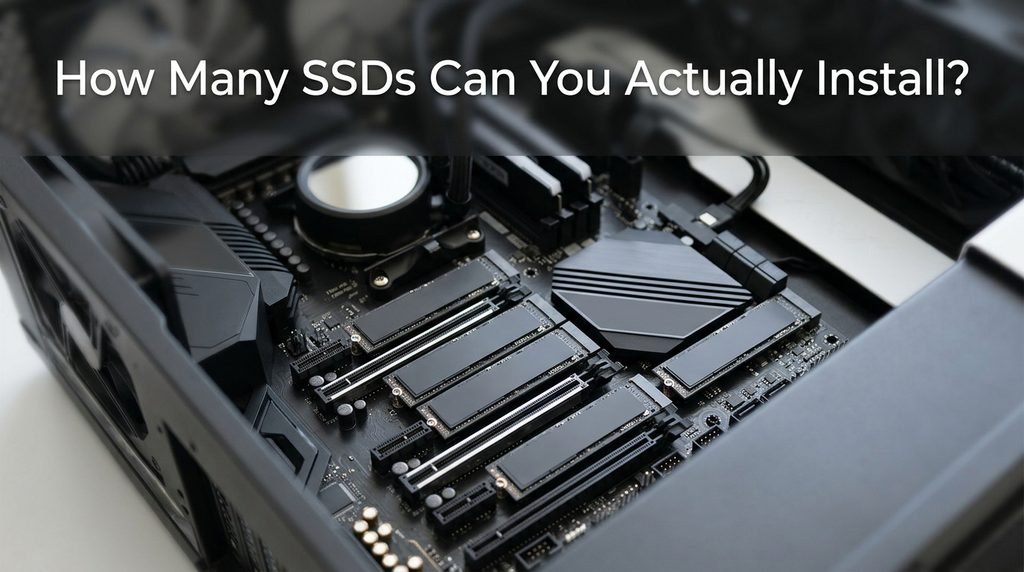
This isn’t a flaw exactly; it’s how the chipset’s limited PCIe lanes get divided up. Higher-end boards have more lanes and fewer of these conflicts, while budget boards often disable ports the moment you fill a specific slot. Your motherboard manual will have a small table explaining exactly which slots conflict with which — worth five minutes before you buy a second or third drive.
Mid-range and high-end boards aimed at enthusiasts often include two, three, or even four M.2 slots specifically to avoid this headache. If you’re planning to run multiple drives — say, one fast NVMe for your operating system and a larger SATA SSD for storage — it’s worth checking this table before you commit to a purchase, not after. Nothing’s more frustrating than installing a second drive only to discover your board silently killed a port you were already using.
Desktop vs. Laptop Compatibility
Desktops are far more forgiving here since most modern boards include both SATA and at least one M.2 slot. Laptops are a different story entirely. Some ultrabooks only support one specific M.2 length (2280, 2242, or 2230), and a handful of models even solder storage directly to the board, leaving zero upgrade path.
Before buying an SSD for a laptop, search your exact model number plus “SSD upgrade” rather than trusting general advice. Two laptops with almost identical names can have completely different storage layouts.
This distinction matters a lot when people search are ssds compatible with all motherboards while actually holding a laptop, not a desktop tower. Laptop manufacturers frequently lock down upgrade paths through firmware or physical space constraints that simply don’t exist on a standard desktop board, so what works for a friend’s desktop upgrade might not apply to your laptop at all.
BIOS/UEFI Settings That Block a Working SSD
Sometimes the SSD is perfectly compatible, but a setting is quietly getting in the way. Older systems set to Legacy BIOS mode instead of UEFI can fail to boot from NVMe drives entirely, even though the hardware itself works fine — another reminder that are ssds compatible with all motherboards often comes down to firmware, not just physical fit.
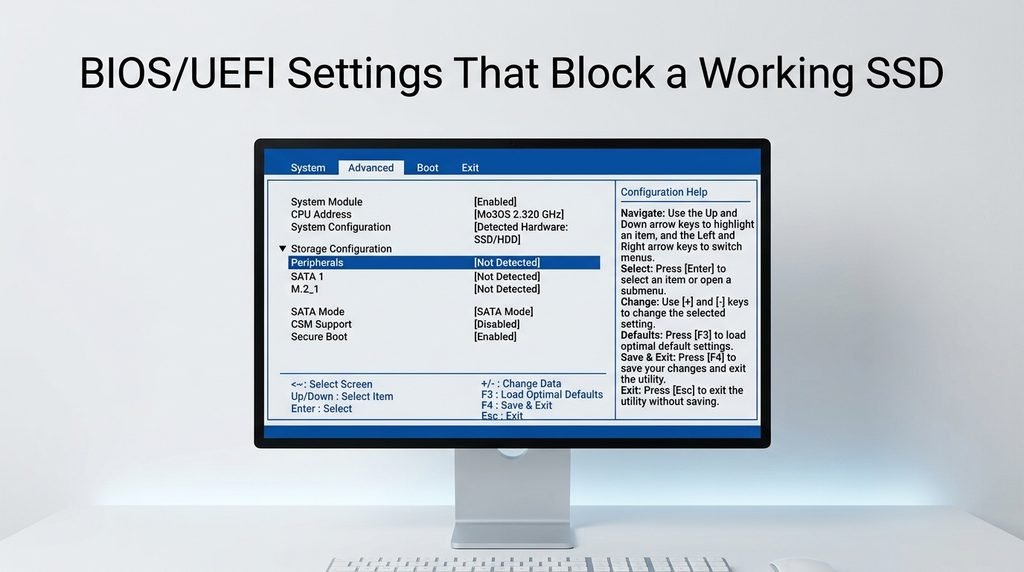
Check your BIOS for a setting labeled Boot Mode or CSM (Compatibility Support Module) — switching from Legacy to UEFI usually resolves this. It’s also worth checking that AHCI mode is enabled rather than the older IDE mode, since IDE mode can prevent SSDs from performing correctly, even on drives that are otherwise fully compatible.
This is exactly the kind of hidden setting that makes people doubt are ssds compatible with all motherboards when the real issue has nothing to do with the drive itself. A five-minute BIOS setting change often fixes what looks like a hardware failure at first glance — worth trying before you assume the drive is defective and start a return process.
My SSD Isn’t Showing Up — Troubleshooting Checklist
If you’ve confirmed compatibility and the drive still won’t appear, work through this list in order:
- Reseat the drive — M.2 SSDs especially need to sit flush before the screw is tightened.
- Check Device Manager or your BIOS storage menu directly, since Windows sometimes hides undetected drives from File Explorer entirely.
- Update your motherboard’s BIOS, particularly if you’re using a very new SSD on an older board.
- Try a different M.2 slot if your board has more than one — some are wired differently than others.
- Confirm the drive isn’t DOA by testing it in another system if you have access to one.
Nine times out of ten, it’s one of these five things rather than a genuine are ssds compatible with all motherboards mismatch at the hardware level. True hardware incompatibility usually shows up immediately as a physical fitting problem — the drive won’t even seat — rather than a drive that installs fine but just doesn’t appear in Windows.
SATA vs. NVMe: Which Should You Buy?
If your motherboard supports both, NVMe is worth the extra cost for anything involving gaming, video editing, or heavy multitasking. The load-time difference is genuinely noticeable, not just a number on a spec sheet — which is exactly why so many people research are ssds compatible with all motherboards before deciding which drive fits their build best.
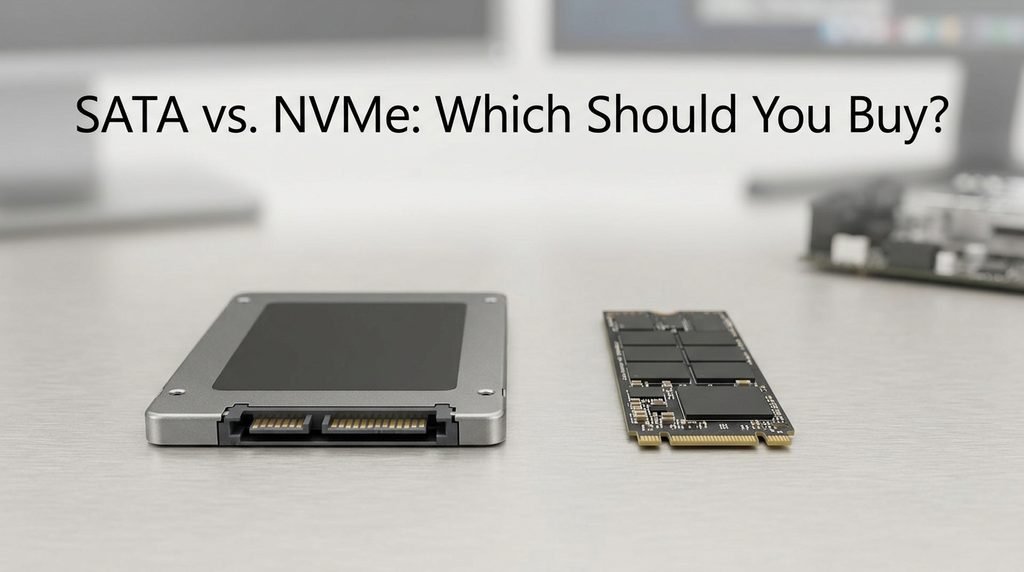
For a budget build, an older PC, or simple everyday use — web browsing, documents, light gaming — a SATA SSD is still a massive upgrade over a hard drive, and it sidesteps compatibility headaches almost entirely.
There’s no universally “right” answer here — it genuinely depends on your motherboard and what you use your PC for. Someone asking are ssds compatible with all motherboards while planning a video editing rig needs a different answer than someone reviving a ten-year-old office PC. Match the drive to the actual work, not just the biggest number on the spec sheet.
FAQs
Are SSDs compatible with all motherboards, or just newer ones? SATA SSDs work with almost any motherboard from the past 15 years. NVMe SSDs need a specific type of M.2 slot, which older or budget boards sometimes don’t have.
Can I put an NVMe SSD in a SATA-only M.2 slot? No. The slot needs to support the PCIe protocol specifically. If it’s SATA-only, an NVMe drive won’t be detected even though it physically fits.
Do I need to update my BIOS before installing an SSD? Usually not for SATA drives. For newer NVMe SSDs on older boards, a BIOS update sometimes resolves detection issues, so it’s worth checking if the drive doesn’t show up right away.
Will installing an M.2 SSD disable any of my SATA ports? On some motherboards, yes. Check your manual’s storage configuration table, since certain M.2 slots share bandwidth with specific SATA ports.
Are ssds compatible with all motherboards for gaming PCs? Generally, SSD compatibility depends on whether the motherboard supports the SSD’s interface and form factor.
How do I know for certain are ssds compatible with all motherboards I might already own? Pull up your exact board model’s spec sheet and compare it against the drive’s listed interface. That single comparison answers the question far more reliably than any general rule of thumb ever could.
Conclusion
So, are ssds compatible with all motherboards? Not universally — but once you know your board’s SATA port count, M.2 slot type, and PCIe generation, picking the right drive takes about five minutes of research instead of a guessing game.
Check the manual, match the interface, and you’ll avoid the most common upgrade mistake: buying a perfectly good SSD that simply doesn’t fit what you already own. That’s the entire answer to are ssds compatible with all motherboards in practice — know your slots, and the rest falls into place.
Related Post:
XPG Xenia G15 Upgrade SSD: 7 Proven Steps for 2026
External SSD for iPhone 17 Pro Max: 7 Proven Picks (2026)
1TB vs 2TB SSD: Which One Do You Actually Need?